
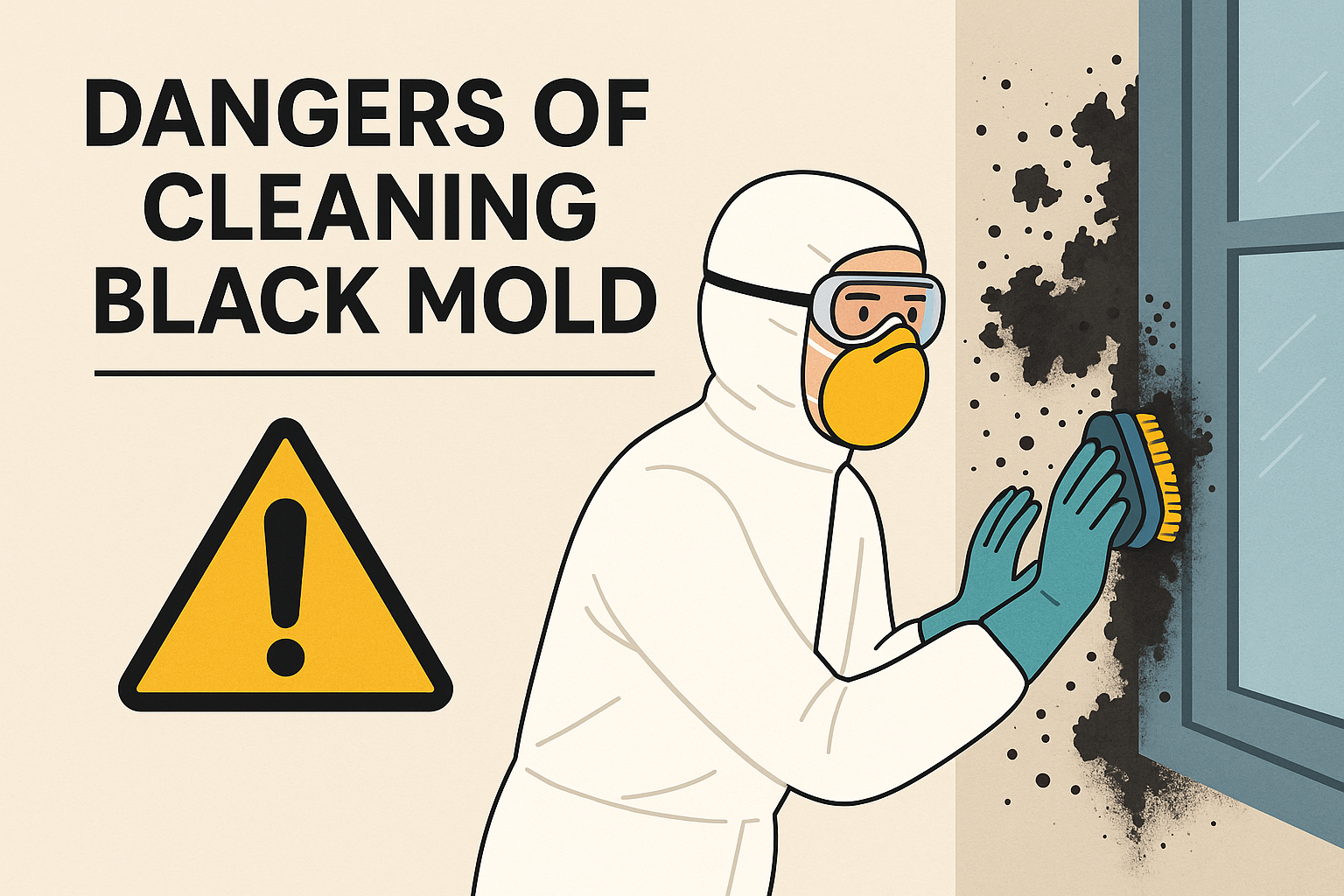
Black mold is more than just an unsightly problem — it’s a serious health hazard that can affect both your home and your wellbeing. This common household issue thrives in damp, poorly ventilated areas and can quickly spread if not addressed correctly. Understanding the risks, how to clean it safely, and when to call a professional is key to keeping your home and family safe.
A Rising Trend: More People Attempting DIY Mold Cleaning
Over the past year, we’ve noticed a significant increase in homeowners attempting to clean black mold themselves.
While this may seem like a cost-effective solution, it can actually make the problem worse if done incorrectly.
What is Black Mold?
Black mold (Stachybotrys chartarum) is a type of fungus that grows in areas with excess moisture, such as:
- Bathrooms and kitchens
- Around windows and doors
- Basements or crawl spaces
- Leaking pipes or roofing areas
It feeds on materials like wood, drywall, and wallpaper, causing gradual damage to your home’s structure.
Health Risks from Black Mold Exposure
When disturbed, black mold releases tiny spores and mycotoxins into the air. Breathing these in or having direct contact with mold can lead to a variety of health problems, ranging from mild to severe.
1. Respiratory Issues
Black mold spores can irritate your respiratory system, causing:
- Persistent coughing
- Wheezing or shortness of breath
- Sinus congestion and sore throat
- Worsening of asthma or COPD symptoms
2. Allergic Reactions
Some people develop strong allergic reactions to mold, including:
- Sneezing and runny nose
- Itchy or watery eyes
- Skin rashes or irritation
3. More Serious Complications
Prolonged exposure can have serious effects, especially in vulnerable individuals such as children, the elderly, or those with weakened immune systems. These may include:
- Chronic bronchitis or lung infections
- Severe fatigue and headaches
- Neurological symptoms in extreme cases
Why Mold Spreads Quickly
Mold reproduces by releasing microscopic spores that float through the air. When cleaning without proper precautions, these spores can:
- Travel to other areas of your home
- Settle on furniture, carpets, or within HVAC systems
- Lead to recurring infestations that are harder to control
Safe Black Mold Removal Tips
If the affected area is small (less than 1m² / 10 sq. ft.), you can attempt to clean it yourself. For larger infestations, it’s best to call a professional mold remediation service.
Protective Gear You’ll Need
Always wear proper PPE (personal protective equipment) when cleaning mold:
- N95 or FFP2 respirator mask
- Safety goggles
- Rubber or nitrile gloves
- Long-sleeved clothing (wash immediately after use)
Step-by-Step Cleaning Guide
- Seal off the area by closing doors and covering vents.
- Mix a mild cleaning solution, such as white vinegar and water.
- Gently scrub the mold without over-saturating the surface.
- Dry the area thoroughly to prevent regrowth.
- Safely bag and dispose of any contaminated cleaning materials.
⚠️ Avoid bleach unless you have good ventilation and never mix it with ammonia or other cleaners — this creates dangerous fumes.
When to Call a Professional
Professional help is recommended when:
- The mold covers a large area or multiple rooms.
- There is structural damage, like rotting wood or crumbling plaster.
- Household members are experiencing severe health symptoms.
- Mold keeps coming back despite repeated cleaning efforts.
Preventing Mold Growth
The best way to deal with black mold is to prevent it from forming:
- Fix leaks in pipes, windows, or roofing immediately.
- Keep humidity levels low by using dehumidifiers or proper ventilation.
- Regularly check bathrooms, kitchens, and basements for early signs of mold.
- Clean and dry damp areas promptly after spills or floods.
Final Thoughts
Black mold isn’t just a cosmetic problem — it’s a serious health risk that requires prompt and careful action. By understanding the dangers and taking preventative steps, you can protect your home and loved ones.
If you suspect a major mold problem, don’t wait — contact a professional mold remediation specialist to handle the situation safely.